
Authentic Norwegian Kransekake
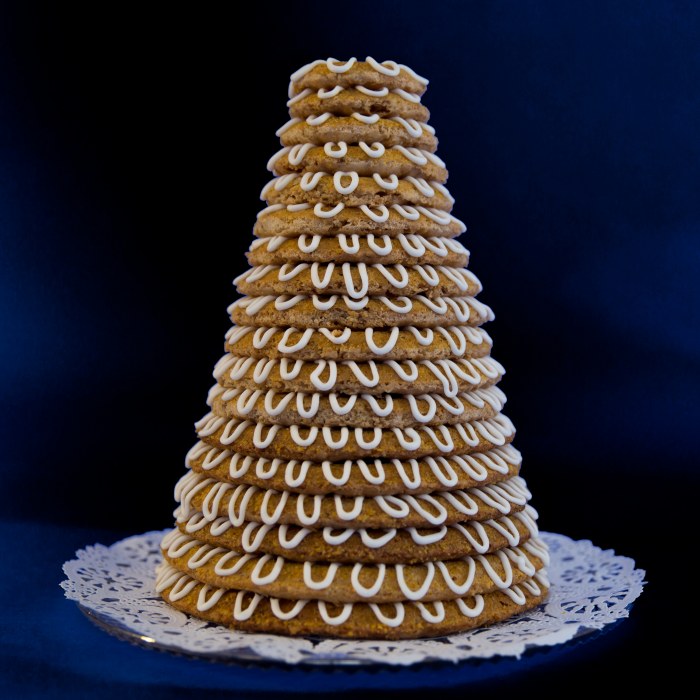
|
Active Time |
Total Time |
Serving |
|
30 Mins |
1 Hour 20 Mins |
4 |
Who doesn’t like soft sponge cake? This cake is dense, chewy, and almond-heavy. It behaves more like structured marzipan than batter.
If you are expecting it to pur, rise, or forgive sloppy measurements, you’re gonna mess this up. Kransekake works just because the egg whites, sugar, and almondsare handled correctly and patiently.
Ingredients
- 3 cups whole almonds (raw, unblanched is traditional)
- 4 egg whites, room temperature
- 4 cups powdered sugar (for dough)
- 2 cups powdered sugar (for adjusting texture later)
- 1 additional egg white
- ½ teaspoon lemon juice (fresh, not bottled)
Method
- Grind the almonds.
Grind the almonds finely using a food processor or almond grinder. You want a texture close to coarse flour, not paste. If it turns oily or clumps, you’ve gone too far and overheated it. Stop early and pulse in short bursts. - Mix almonds and sugar.
In a large bowl, combine ground almonds and 4 cups powdered sugar. It should look evenly mixed and dry. If you see streaks of sugar, keep mixing — uneven sugar distribution causes weak spots that crack while baking. - Add egg whites and knead.
Add 3 egg whites and knead by hand until a stiff dough forms. This will feel firm, slightly sticky, and resistant. If it feels wet, you added too much egg white — dust with powdered sugar to recover. - Rest the dough.
Wrap tightly in cling film and refrigerate at least 1 hour, ideally overnight. Skipping this step guarantees spreading and cracked rings. The dough needs time to hydrate evenly. - Prepare the molds.
Grease kransekake ring molds thoroughly, then coat with semolina, flour, or breadcrumbs. If you skip the coating, the rings will stick and break. Don’t trust “non-stick” — it’s not enough. - Preheat and portion.
Preheat oven to 210°C (410°F), top and bottom heat. Divide dough into 6 portions so texture stays consistent while shaping. - Adjust dough and shape rings.
Slowly knead in the remaining egg white with lemon juice until you can roll smooth ropes about index-finger thickness. If it cracks while rolling, it’s too dry — add powdered sugar sparingly, not egg white. - Fill molds.
Press dough ropes into molds and pinch ends together firmly. Weak seams open during baking. Smooth the surface — cracks now get worse later. - Bake.
Place molds on a baking sheet and bake 10–12 minutes until lightly golden on top. Pale means underbaked and fragile; dark brown means dry and bitter. Watch closely — almond dough burns fast.
What the Final Result Should Be Like
The rings should be firm but slightly chewy inside, dry on the surface, and deeply almond-scented. They should release cleanly from the molds once cooled. If they crumble, they were underbaked. If they’re rock hard, your oven was too hot, or you baked too long.
Nutritional Breakdown (Approximate, per serving – based on 12 servings)
- Calories: ~430 kcal
- Protein: ~10 g
- Carbohydrates: ~48 g
- Fats: ~24 g
- Fiber: ~6 g
Recipe and Images credit by ScandinavianCookbook
