Okay, now this is your 2500 calories diet plan, i don’t wanna say so much. So without wasting any minutes, let’s dive right in.
This content is for informational purposes only. I’m not providing medical or nutritional advice. Diet needs vary by individual—consult a qualified professional before making changes
What a 2,500-Calorie Diet Actually Is (And What It Isn’t)
A 2,500-calorie diet means you eat about 2,500 calories per day. That’s it. No magic. No inherent health value. No guarantee of muscle gain or fat loss.
Here’s the part most articles get wrong:
2,500 calories is not a goal. It’s a number that either matches your energy needs—or it doesn’t.
- For some people, 2,500 calories is a fat-loss diet.
- For others, it’s maintenance.
- For others, it’s a slow bulk.
And for a lot of people reading this, it’s just too much food.
Calories don’t care about your intentions. They respond to physics and biology. Eat more than you burn → gain weight. Eat less → lose weight. Everything else is detail.
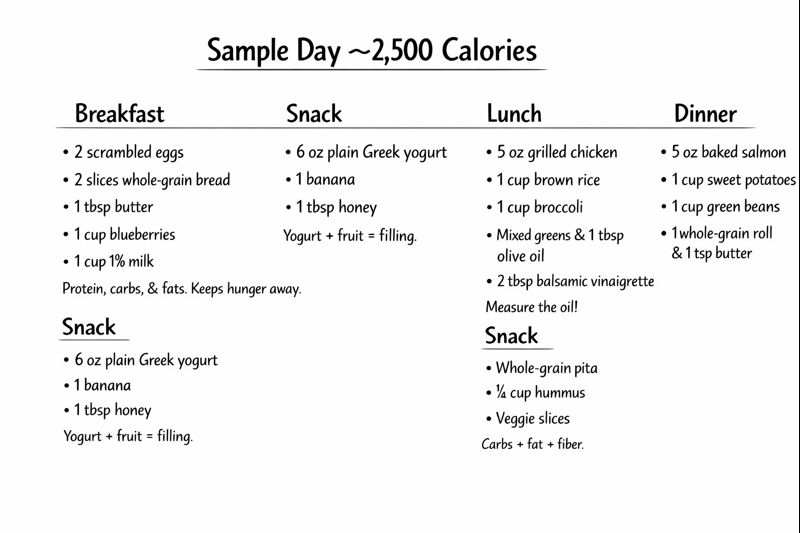
Sample Day – ~2,500 Calories
Breakfast
- 2 whole eggs, scrambled
- 2 slices whole-grain bread
- 1 tablespoon butter (measured, not guessed)
- 1 cup blueberries
- 1 cup low-fat (1%) milk
Why this works:
Protein is solid, carbs are front-loaded, fats are controlled. This keeps hunger down later. People who skip fat here usually overeat at night.
Snack
- 6 oz plain nonfat Greek yogurt
- 1 medium banana
- 1 tablespoon honey
Note: This snack looks small. It’s not. Yogurt + fruit beats protein bars for satiety and micronutrients.
Lunch
- 5 oz grilled chicken breast
- 1 cup cooked brown rice
- 1 cup steamed broccoli
- 1 tablespoon olive oil (used for cooking or drizzled)
- 2 cups mixed greens (spinach, romaine, arugula)
- 2 tablespoons balsamic vinaigrette
Reality check: is where people lie to themselves. If you don’t measure the oil, this meal stops being 600–650 kcal real fast.
Snack
- 1 whole-grain pita
- ¼ cup hummus
- 1 cup sliced cucumber and bell peppers
Why this stays in:
Carbs + fat + fiber. This prevents “I need something crunchy” disasters later.
Dinner
- 5 oz baked salmon
- 1 cup roasted sweet potatoes
- 1 cup green beans
- 1 teaspoon olive oil (for roasting)
- 1 whole-grain dinner roll
- 1 teaspoon butter
This is intentional:
Higher fat at dinner helps satisfaction. Cutting fat here is how people end up snacking at 10 pm.
This is an sample diet plan which might help you.
Who a 2,500-Calorie Diet Is Actually For
This is where most people screw up. They picked 2,500 because it sounds reasonable.
It’s not universal.
A 2,500-calorie intake usually fits:
- Moderately to highly active adults
- People lifting weights 3–6 days/week
- Larger-bodied individuals (taller, heavier, more muscular)
- People whose true maintenance is already near 2,500
It is not automatically appropriate if:
- You’re sedentary
- You’re smaller-framed
- You train inconsistently
- You “walk sometimes” and call it active
I’ve watched plenty of people gain fat on 2,500 calories while insisting they were “eating clean.” Clean doesn’t override math.
If you don’t know your maintenance calories, 2,500 is a guess. Sometimes a decent one. Often not.
Macronutrient Targets That Actually Make Sense
This is your breakdown of macros. This provides you with a balanced meal.
- Protein: 140–180 g (22–30%)
- Carbs: 270–320 g (45–55%)
- Fat: 70–90 g (25–30%)
- Fiber: 30–40 g/day
Why this works
- Protein is high enough to preserve muscle and control hunger.
- Carbs support training and recovery.
- Fat stays high enough to keep hormones and joints happy.
What doesn’t work?
Ultra-low fat, protein barely above the RDA, or carbs slashed for no reason. I’ve tried all three. Performance tanks. Hunger spikes. Compliance dies.
If you lift, protein is non-negotiable. Anyone telling you otherwise doesn’t train seriously.
For protein recommendations grounded in actual research, the International Society of Sports Nutrition (ISSN) position stand is one of the few sources worth trusting. They’re not selling detox tea.
A Realistic 1-Day Structure (Not a Pinterest Fantasy)
This is a structure, not a rigid plan.
Breakfast
- Eggs or Greek yogurt
- Oats
- Fruit
Snack
- Yogurt, milk, nuts, or fruit + protein
Lunch
- Grain (rice, potatoes, pasta)
- Lean protein
- Vegetables
- Measured fat
Snack
- Protein-focused (whey, cottage cheese, legumes)
Dinner
- Protein
- Vegetables
- Grain or starch
Notice what’s missing? “Superfoods.” Detox nonsense. Moral judgment.
It’s food you can eat every day without hating your life.
How to Adjust Without Overthinking It
This is refreshingly simple.
- Gaining weight unintentionally? Drop ~200 kcal
- Losing weight unintentionally? Add ~200 kcal
- Wait 7–14 days, then reassess
Not daily. Not emotionally. Not after one salty meal.
Body weight fluctuates. Trends matter.
The NIH’s metabolic research consistently shows short-term fluctuations don’t reflect true energy balance.
The Bottom Line (No Sugarcoating)
A 2,500-calorie diet isn’t special. It’s not smart. It’s not dumb.
It works only if it matches your actual energy needs.
Results don’t come from perfect food choices.
They come from:
- Consistent intake
- Adequate protein
- Honest tracking
Adjustments based on data, not vibes
If you’re guessing, you’re gambling. Sometimes you win. Usually you stall.
Use 2,500 calories as a starting point, not an identity. Adjust it. Own it. Or abandon it if it doesn’t fit.